


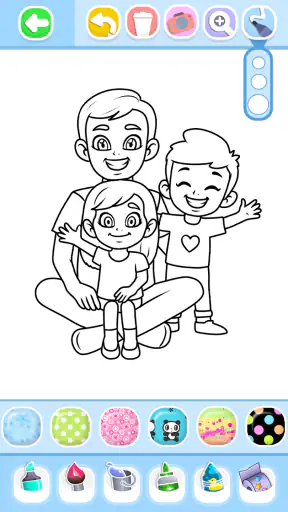
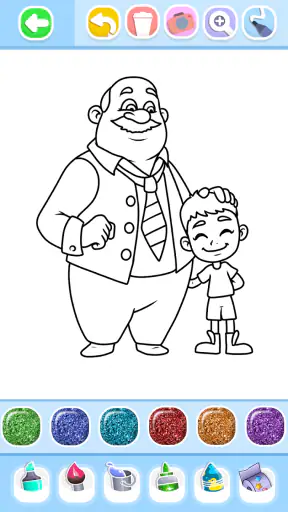
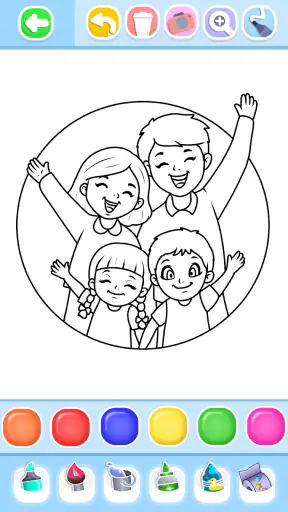
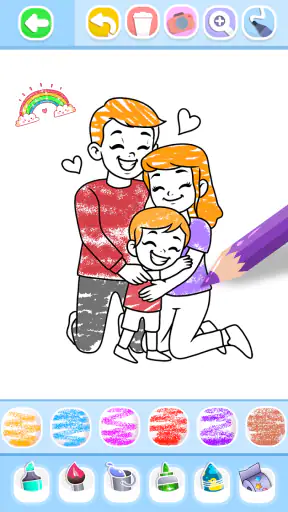
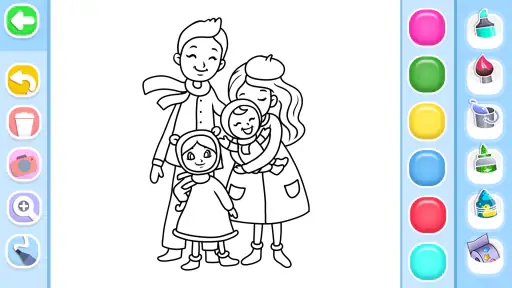
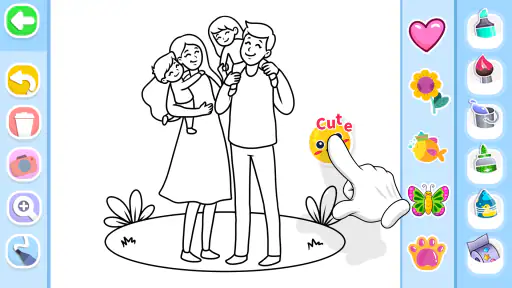
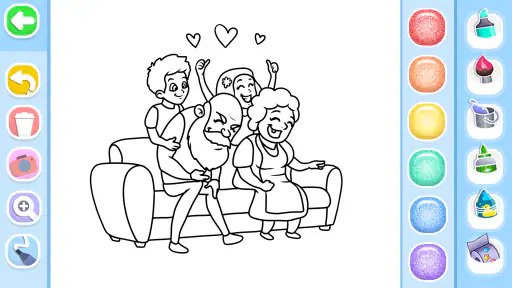
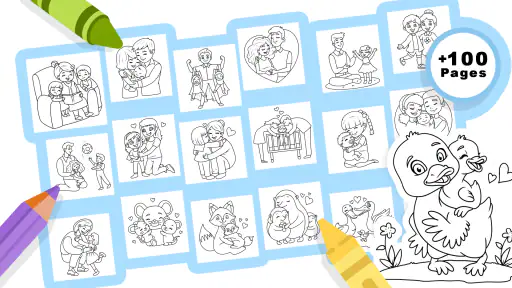
Family Love Coloring Book is the kind of parenting app I would reach for when I want a calm, shared activity rather than another noisy screen experience. Its central idea is simple: family-themed coloring gives children and adults something easy to do together. After spending time with it, my overall impression is that it works best as a low-pressure creative break, not as a full educational platform or a replacement for a traditional coloring book.
That distinction matters. The app is free to start, suitable for Everyone, and made by FunKidStudio, so it is clearly aimed at broad household use. It has also passed the one-million-install mark, which suggests that the concept has reached plenty of families. Still, its average rating of 3.6 from roughly 600 ratings points to a mixed experience rather than universal approval. I can understand that balance: the idea is approachable and useful in the right moment, but the appeal depends heavily on whether your child enjoys digital coloring and whether you are comfortable with the limits of a simple app.
What makes the coloring experience worthwhile
The strongest part of Family Love Coloring Book is its shared, gentle theme. Instead of presenting coloring as an isolated activity, it frames the pictures around family affection. That gives parents an easy opening for conversation. A child can choose a picture, talk about the people or feelings it brings to mind, and then decide how to color it. I found that this makes the app more valuable when an adult participates, even if the adult only asks a few questions instead of coloring every section.
I would not describe it as a demanding creative tool. That is actually one of its advantages for younger children. There is no need to learn complicated controls before getting started, and the activity does not require artistic confidence. A child can experiment with colors without worrying about wasting paper or making a permanent mistake. For a parent, that means less preparation than setting up paints, water, brushes, and a table that will need cleaning afterward.
The app also fits short periods of family time. I can imagine using it after dinner while waiting for a child to settle down, during a quiet afternoon at home, or on a day when everyone wants an activity but nobody has the energy for a complicated game. The best use is not handing over the phone and walking away. The better routine is to sit beside the child, let them choose the picture, and use the finished image as a prompt for a small conversation.
One practical tip is to give the child a theme before opening the app. For example, you might suggest using colors that remind them of home, choosing a special color for each family member, or making a picture for someone who is away. This turns a basic coloring session into a small personal project. It also prevents the experience from becoming a quick sequence of random taps, which is the main risk with any digital coloring activity.
Another useful approach is to let the child explain the result instead of correcting it. If the sky is purple or a person has unusual clothing colors, I would treat that as part of the creative process. The family focus gives adults a natural reason to ask why a choice was made. That is a more meaningful benefit than simply filling spaces with color, and it does not require the app to offer formal lessons or complex tools.
A good fit for shared routines
For families with children who enjoy visual activities, the app can become a small ritual. A parent might choose one picture at the weekend, color alongside the child, and save the conversation for the end. The value comes from consistency and attention, not from finishing a large number of images. I would use it as a bridge between screen time and face-to-face time: the screen starts the activity, but the discussion around it gives the activity its real character.
It can also work for siblings with different ages, although expectations should be adjusted. A younger child may enjoy selecting colors and filling large areas, while an older child may want more ownership over the overall look. Rather than making both children follow the same method, I would let each person use the app differently. One child can focus on speed and bright colors; another can spend longer refining a picture or explaining the choices.
There is a small but important trade-off here. Digital coloring is cleaner and easier to repeat than paper coloring, but it does not provide the same physical experience. Children who enjoy the feel of crayons, the sound of pencils, or displaying artwork around the house may find a printed coloring book more satisfying. I would not present this app as a complete substitute for those materials. It is better understood as a convenient extra option for moments when a physical setup is impractical.
Where the simple design may fall short
The same simplicity that makes the app approachable can also make it feel limited. If you are looking for structured learning, detailed drawing controls, guided art instruction, or a broad creative studio, this is probably not the right choice. The family theme gives it a clear identity, but it also narrows the experience. A child who quickly moves beyond basic coloring may want an app with more ways to draw, edit, and create from a blank page.
I also think parents should pay attention to how the child interacts with the screen. A coloring app can look educational while still becoming passive tapping if the adult is not involved. The family message is most convincing when it leads to conversation or cooperation. Without that participation, the app may be no more socially engaging than any other simple digital coloring activity.
The free entry point is helpful, but in-app purchases ranging from $0.99 to $3.99 per item mean that families should check the purchase experience before allowing independent use. I would keep purchasing under adult control and decide in advance whether extra content is worth paying for. That is not a criticism of the price itself; it is a practical reminder that “free” does not necessarily mean every part of the experience is included without charge.
Device compatibility is another point to consider. The current version is 9 and requires Android 7.0 or later. For many households that will be perfectly manageable, but an older phone or tablet may not qualify. I would check the device before planning the app as a travel activity, especially if you are relying on an older spare phone for a child.
The age rating of Everyone makes the app easy to consider for a mixed-age household, but that rating should not be confused with a recommendation for every child. A preschooler may need help with controls, while an older child may find the activity too basic. The right age depends less on the label and more on whether the child enjoys coloring and whether an adult wants to turn the activity into shared time.
How I would use it in everyday life
Imagine a rainy afternoon when a child is restless, the usual toys have lost their appeal, and you do not want to start a messy craft project. I would open Family Love Coloring Book with the child, choose a family-related picture, and agree on a small goal: finish one image together, then talk about it for a few minutes. If the child loses interest, I would stop rather than push for completion. The app works better as an invitation than as an assignment.
For a long car journey or a waiting room, I would use it differently. The child could color independently for a short period, but I would still set expectations about taking breaks and sharing the device if another family member needs it. A tablet stand or a larger screen may make shared coloring more comfortable than a small phone, particularly when two people are looking at the same image. That is a workflow choice rather than a special feature, but it can strongly affect whether the activity feels collaborative or cramped.
A thoughtful parent can also use finished pictures as small gifts. A child might create an image for a grandparent, sibling, or parent and then show it during a call. Even if the app itself is simple, that follow-up gives the coloring a purpose beyond occupying time. I would be careful not to turn every picture into a performance, though. The child should be free to make something private, unfinished, or simply strange.
Another tip is to alternate digital and physical coloring. Use the app when convenience matters, then offer crayons or pencils on another day. This avoids treating one format as superior and lets you see what the child actually enjoys. If the child consistently prefers physical materials, that is a clear sign that a paper book is the better everyday option. If the child likes choosing colors quickly and revisiting images without cleanup, the app has a more convincing role.
How it compares with familiar alternatives
Compared with a printed family coloring book, this app is easier to carry and quicker to set up. There is no need to buy replacement pages or find a flat surface, and a child can begin as soon as the device is available. The downside is that the result is less tangible. Paper gives children something they can hang on a refrigerator or place in a folder, while digital coloring keeps the work inside the device.
Compared with a general drawing app, Family Love Coloring Book offers a more focused starting point. A blank canvas can be intimidating for a young child, whereas a ready-made coloring image provides immediate direction. The trade-off is creative freedom. A general drawing tool is better for children who want to invent characters, write stories, or build a picture from scratch. This app is better for families seeking a guided activity with a clear emotional theme.
Compared with a video, it is more participatory. The child has to make choices rather than simply watch, and an adult can join without needing to understand a complicated game system. Compared with a larger educational app, however, it is much narrower. I would choose it for a quiet creative pause, not for reading practice, numeracy work, or a broad curriculum.
That makes the decision fairly straightforward. If your priority is convenience, a family-centered activity, and an easy way to start a conversation, it deserves a try. If your priority is advanced art creation, strong educational progression, or a physical keepsake, another option will likely serve you better.
Who should try it and who should skip it
I think Family Love Coloring Book is best for parents who want a simple activity they can join without much preparation. It suits children who already enjoy coloring, families looking for a calm shared routine, and adults who want a screen activity that can lead naturally into talking about feelings and relationships. It may also help when a child needs a gentle transition between energetic play and bedtime, provided the device itself does not make the child more alert.
I would be less enthusiastic for families whose children quickly become frustrated by basic coloring or who need highly adjustable creative tools. I would also skip it if you specifically want printable artwork, formal art instruction, or a large collection of unrelated subjects. The family theme is the reason to choose this app, not a minor detail. If that theme does not interest your household, the experience may feel too narrow.
Parents should also decide how much supervision fits their family. For a younger child, I would stay nearby and handle any purchase decisions. For an older child, independent use may be reasonable if the device is already configured for safe access, but I would still check whether the app is being used creatively or merely as repetitive screen filler. The best results come from treating it as a shared tool, even when the child does some coloring alone.
My final view after using it
Family Love Coloring Book succeeds when it stays modest. It does not need to be a complete art studio to be useful. Its real strength is giving families an uncomplicated reason to sit together, choose colors, and talk. The free price makes trying it easy, while the Everyone rating broadens its household appeal. FunKidStudio has chosen a focused idea, and that focus is more valuable than a long list of unrelated activities would be.
At the same time, I would not recommend it without qualification. The middling 3.6 average shows that it will not satisfy every user, and I can see why: children seeking advanced creativity may outgrow it, and parents expecting a full learning experience may find the scope too small. The optional purchases also deserve adult attention, especially on a device shared with children.
My recommendation is to try Family Love Coloring Book if you want a gentle, family-oriented coloring break and are willing to participate at least occasionally. Use it with a conversation prompt, alternate it with paper art, and keep purchases controlled. If you do that, the app can become a pleasant part of a family routine rather than just another distraction. For families wanting deeper artistic freedom or structured education, I would choose a different tool; for a simple shared coloring moment, this one has a clear and worthwhile place.


